
Introduction
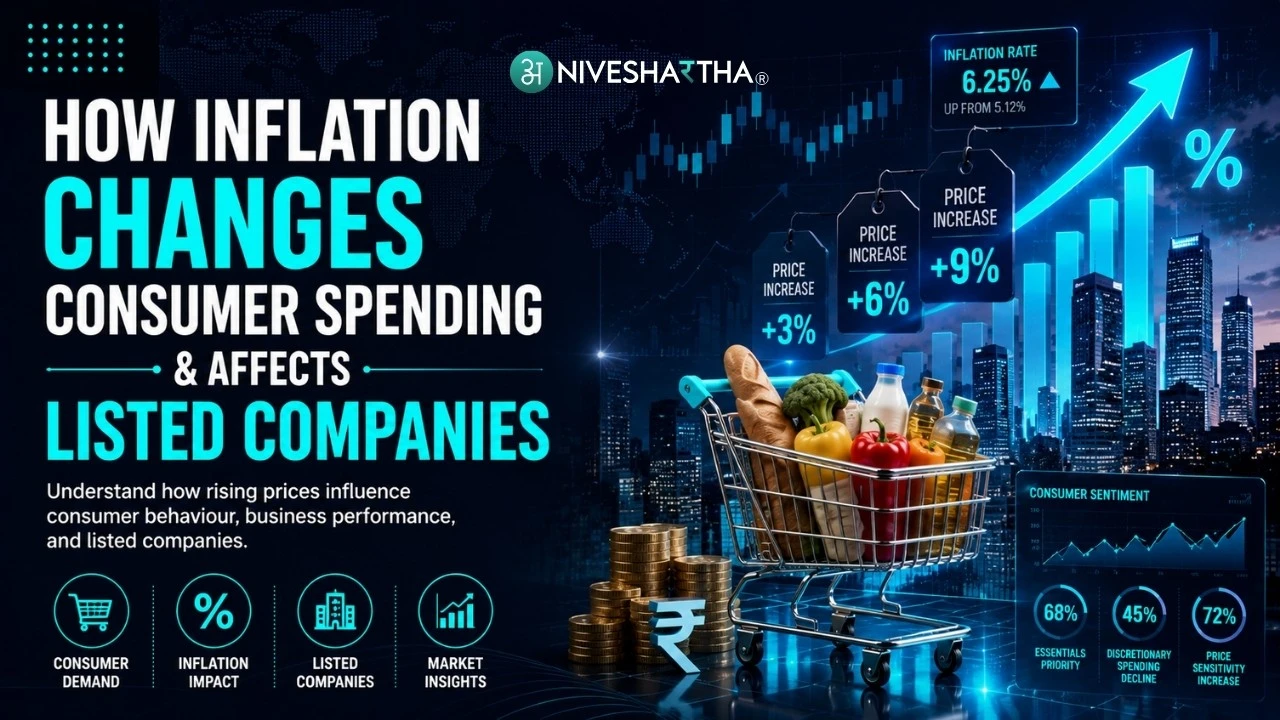
Inflation is one of the most important economic factors that influences both consumers and businesses. It affects the prices of goods and services, purchasing power, corporate profitability, and overall market sentiment. Whether inflation is rising or falling, its impact can be seen across industries and eventually reflected in the performance of listed companies.
For investors interested in Investing in Stock, understanding how inflation affects consumer behavior and business performance is essential. It helps in evaluating industry trends, company resilience, and long-term investment opportunities.
In this article, we'll explore how inflation influences consumer spending and why it matters when analyzing listed companies.
What is Inflation?
Inflation refers to the general increase in the prices of goods and services over time, reducing the purchasing power of money.
For example, if inflation rises by 6%, consumers may need to spend more money to buy the same products they purchased previously.
How Inflation Changes Consumer Spending
1. Consumers Prioritize Essential Expenses
As prices rise, households often allocate more of their income toward necessities such as:
- Food
- Fuel
- Healthcare
- Utilities
This may reduce spending on discretionary items like luxury goods, electronics, travel, and entertainment.
2. Purchasing Power Declines
Higher inflation means consumers can buy fewer goods and services with the same income.
This often leads to:
- Reduced discretionary spending
- Delayed purchases
- Greater focus on value and affordability
3. Demand Patterns Shift
Consumers may:
- Switch to lower-priced alternatives.
- Reduce non-essential purchases.
- Compare prices more frequently.
- Look for discounts and promotions.
Companies that offer essential products may experience more stable demand compared to businesses focused on discretionary spending.
How Inflation Affects Listed Companies
Consumer Goods Companies
Companies selling essential products may experience relatively stable demand, although higher input costs can influence profitability if costs cannot be passed on to customers.
Automobile Companies
Higher vehicle prices and financing costs may lead some consumers to postpone purchases, which can affect demand.
Real Estate Companies
Inflation is often accompanied by changes in interest rates, which can influence borrowing costs and housing demand.
Banking & Financial Services
Changes in interest rates associated with inflation can affect lending, borrowing, and financial activity. The overall impact varies depending on market conditions and business models.
Technology Companies
Businesses and consumers may reassess discretionary technology spending during periods of higher inflation, depending on economic conditions.
How Businesses Respond to Inflation
Companies often adopt different strategies to manage inflationary pressures, including:
- Improving operational efficiency
- Optimizing supply chains
- Reviewing pricing strategies
- Managing costs
- Investing in productivity improvements
Their ability to adapt can influence business performance over time.
Key Indicators Investors Should Monitor
When evaluating the effects of inflation, investors may consider:
- Consumer Price Index (CPI)
- Wholesale Price Index (WPI)
- Company operating margins
- Revenue growth
- Input cost trends
- Consumer demand
- Management commentary in quarterly results
These indicators can provide context when analyzing how businesses respond to changing economic conditions.
Why Inflation Matters for Investors
Inflation influences:
- Consumer spending patterns
- Business costs
- Corporate earnings
- Market sentiment
- Sector performance
Understanding these relationships can help investors interpret broader economic trends alongside company fundamentals.
Best Practices During Inflationary Periods
- Focus on understanding business fundamentals.
- Compare companies within the same industry.
- Monitor changes in operating margins and cost structures.
- Review management commentary and financial reports.
- Evaluate companies using multiple financial and qualitative factors.
Conclusion
Inflation plays an important role in shaping consumer spending habits and influencing the performance of listed companies. As purchasing power changes, businesses across different sectors may experience varying levels of demand, cost pressures, and operational challenges. Understanding these dynamics enables investors to better interpret financial results and broader market trends.
For those interested in Investing in Stock, staying informed about inflation and its impact on industries can support a more comprehensive approach to company analysis and long-term investment decisions.
At NiveshArtha, we are committed to empowering investors with research-based insights and educational content that help simplify complex market concepts. As a SEBI Registered Research Analyst, our focus is on promoting informed decision-making through credible analysis and investor education.
Frequently Asked Questions (FAQs)
1. What is inflation?
Inflation is the general increase in the prices of goods and services over time, which reduces the purchasing power of money.
2. How does inflation affect consumer spending?
Higher inflation often leads consumers to prioritize essential expenses, reduce discretionary spending, and seek more value-oriented purchases.
3. Which sectors are commonly influenced by inflation?
Consumer goods, automobiles, real estate, banking, technology, and other sectors may experience different effects depending on demand, costs, and market conditions.
4. Why should investors monitor inflation?
Inflation can influence consumer behavior, company costs, profitability, and broader market trends, making it an important factor in investment analysis.
5. How can investors evaluate the impact of inflation on companies?
Investors can review financial statements, operating margins, revenue trends, management commentary, and economic indicators such as CPI and WPI.
Disclaimer
Registration granted by SEBI, enlistment as Research Analyst with the Exchange, and certification from NISM in no way guarantee the performance of the intermediary or provide any assurance of returns to investors.
Standard Warning: Investment in securities market are subject to market risks. Read all the related documents carefully before investing.
Niveshartha
August 11, 2026
Get in touch with us
Start investing today, for a better tomorrow
If you’d like to talk to our executive kindly call us on +91 8884014014 during 9 am - 5 pm weekdays.
Start investing today, for a better tomorrow
If you’d like to talk to our executive kindly call us on +91 8884014014 during 9 am - 5 pm weekdays.


*Disclaimer: “Registration granted by SEBI, Enlistment as RA with Exchange and certification from NISM in no way guarantee performance of the intermediary or provide any assurance of returns to investors.”
*Disclaimer: For security/securities displayed in the website and in the advertisement - “The securities quoted (If any) on our website or in any of our advertisement are for illustration only and are not recommendatory.”
*Standard warning: “Investment in securities market are subject to market risks. Read all the related documents carefully before investing.”
*Mandatory notice: “Clients shall be requested to go through Do’s and Don’ts while dealing with RA as specified in SEBI master circular no. SEBI/HO/MIRSD-POD- 1/P/CIR/2024/49 dated May 21, 2024 or as may be specified by SEBI from time to time.”
Note: We have changed our pricing with effective from 01/12/2024.
Niveshartha ©2026 All Rights Reserved.
Developed by Techisor